All kung fu schools are very much family oriented. They are set up like a family and try to instil family values to their members. Family names are used to show respect to instructors and other students. At Yee’s Hung Ga we have many branches so it can be difficult to keep track of who is who and what the proper name should be. The following are the family names and meanings that you will commonly hear at a Yee’s Hung Ga school.
English
Cantonese
Male
Female
Door Man or Founder
Jeurng Mun Yahn
Jeurng Mun Yahn
Lineage Holder
Si-Jo
Si-Jo
Great Grandmaster
Si-Tai Gung
Si-Tai-Poa
Grandmaster
Si-Gung
Si-Poa
Senior Kung Fu Uncle
Si-Bahk
Senior Kung Fu Aunt
Si-Guma
Junior Kung Fu Uncle
Si-Sook
Junior Kung Fu Aunt
Si-Guje
Teacher/Instructor
Si-Fu
Si-Fu
Teacher’s Husband/Wife
Si-Jeong
Si-Mo
Most Senior Brother/Sister
Di-Si-Hing
Di-Si-Jeh
Senior Brother/Sister
Si-Hing
Si-Jeh
Junior Brother/Sister
Si-Dai
Si-Mui
Student
Toh-Dai
Toh-Dai
If you are a student at Yee’s Hung Ga in Inverness, anyone who has been training longer than you at the school, depending on their gender, you would call Si-Hing or Si-Jeh. Anyone who begins at the school after you would be your Si-Dai or Si-Mui, depending on their gender. They would call you Si-Hing or Si-Jeh. Sifu Hepple would be your Sifu and his wife would be called Si-Mo. Sifu Bruce Clark would be your Si-Gung. Sifu Pedro Cepero Yee and Grandmaster Yee Chee Wai would be known as Si-Tai Gung.
If visiting another local Yee’s school, the students of that school would be your cousins. You would address them just as if they were training brothers or sisters at Inverness, Si-Hing, Si-Jeh if more senior and Si-Dai or Si-Mui if junior. The Sifu of that school would be your uncle. You would call them Si-Bahk or Si-Guma if they were Sifu Hepple’s Si-Hing or Si-Jeh. If they were Sifu Hepple’s Si-Dai or Si-Mui, you would call them Si-Sook or Si-Guje.
Confused?!
This might seem rather complex and difficult to learn but it is important to maintain the traditions of the kung fu school so that we can pass on our heritage for future generations. The important ones to remember are your Sifu and Si-Mo/Si-Jeong. Showing further respect to their teacher, Si-Gung/Si-Poa, and their teacher, Si-Tai Gung/Si-Tai Poa is also expected. Everything else can be worked out and nobody else is likely to take great offence if you call them the wrong name. If you are unsure, it is always best to ask, just like anything else that you may be uncertain of.
It is also worth noting that a senior uncle/aunt/brother or sister are senior only by the length of time practicing and not necessarily of a higher rank. Your Si-Hing is, and always will be, your Si-Hing. Just as an older brother can never be demoted to a younger brother, no matter how much you may wish for it to happen.
Other important terms that you may hear is the Kwoon or Kung Fu School itself. We shall look at the etiquette within and around the Kwoon in a future post. Suffice to say though, that it is important to remain respectful and uphold composure whilst in and around the Kwoon. Inside the Kwoon is the Sun-Toi or ancestral altar. We will also discuss this in a future post too. To show respect to the ancestors, who have passed down our art from generation to generation, we bow to the Sun-Toi. We use the traditional ‘sun and moon fist’ to bow to the ancestors, whilst entering and leaving the main training area. You may also hear your Sifu or instructor counting punches or kicks etc in Cantonese. The following table will help you to learn numbers 1 to 10:
English
Cantonese
One
Yat
Two
Yee
Three
Saam
Four
Sai
Five
Ng
Six
Luk
Seven
Chat
Eight
Baat
Nine
Gau
Ten
Sahp
Perhaps you have heard a term that you are unsure of that is not listed here. Please feel free to let us know and we can discuss. If you enjoy our posts and wish to be notified of further posts, notices, discounts and events, pop your email address in the box below and we’ll give you a shout when new posts are added. You can also like and share on Instagram & Facebook
Processing…
Success! You're on the list.
Whoops! There was an error and we couldn't process your subscription. Please reload the page and try again.
The Shaolin Monastery, or Shaolin Temple, is a Buddhist temple in Dengfeng County, Henan Province, China. The name ‘Shaolin’ refers to the location of the temple. It is situated in the forests of Shaoshi mountain, one of the seven peaks of the Song mountains. It literally means “Temple of Shao[shi Mountain] Forest”.
Ariel views of the Shaolin Temple.
The Shaolin Temple is known, not only as the birthplace of Chan, or “Zen,” Buddhism, in China, but also where kung fu martial arts originated. The temple is steeped in myths and legends. (More about these in future posts) Shaolin became a renowned centre for extremely powerful martial arts. As the teachings of Shaolin grew, other Shaolin monasteries appeared across China. From a Southern monastery came the lineage of the Abbot Gee Sim Sim See. He is recognised as the first person to bring Shaolin martial arts out of the temple and to the people of Southern China.
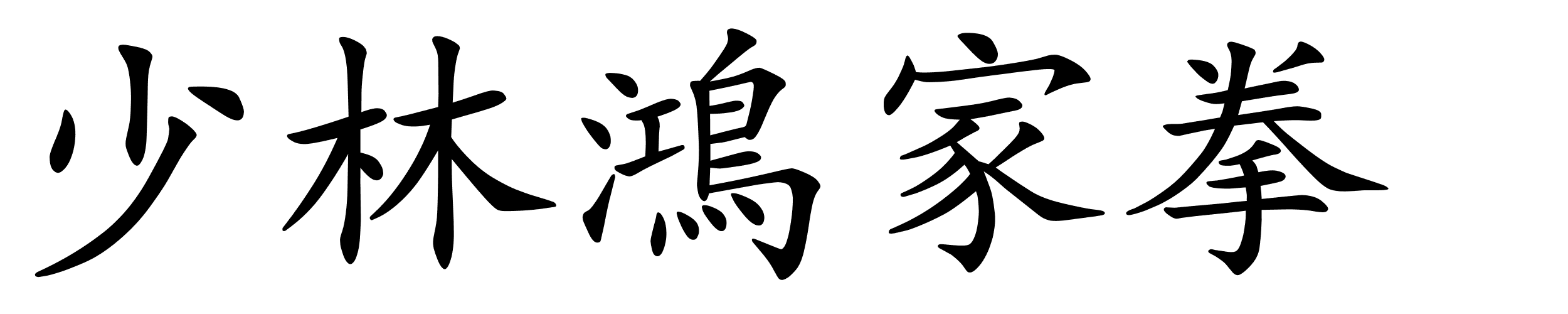
Gee Sim taught five founding fathers of “Southern Shaolin.” The five families of martial arts from the Gee Sim lineage became Hung Ga, Choy Ga, Mok Ga, Lau Ga and Li Ga. The “Ga,” or sometimes “Gar,” means family, in this case the Hung family. The founding father of the Hung family was Hung Hei Guen and therefore it is named after him.
Donnie Yen plays Hung Hei Guen in the 1994 TV series, “The Kung Fu Master”
“Kuen” means fist, but in this case “fist” refers to the art or system of fighting, not just the hand shape. Therefore “Shaolin Hung Ga Kuen,” means, “The fighting art of the Hung family from the temple in the forest of Shaoshi Mountain.”
In general terms, the Hung Ga art is renowned for very strong, rooted stances and extremely powerful arm movements. Training concentrates heavily on stance work, body and arm conditioning, qigong, and practicing the forms or set routines. Yee’s Hung Ga run classes for you to specifically train each of these key areas. The forms are a way of practicing fighting techniques as well as a tool for developing a strong mind and body. One of the most famous forms in the world is the Tiger Crane Double Fist (Fu Hok Seung Ying Kuen). This form is at the core of the entire Hung Ga art.
A montage of Hung Ga Kuen, as portrayed in the movies.
If you have a question that you would like to ask us, why not send us an email or get in touch via our social media? Just search for YHGInverness.
If you like our blog posts, you can also sign up for notifications of further posts, notices, discounts and events, pop your email address in the box below and we’ll give you a shout when new posts are added. You can also like and share on Instagram, twitter & Facebook
Processing…
Success! You're on the list.
Whoops! There was an error and we couldn't process your subscription. Please reload the page and try again.
A common question asked about Yee’s Hung Ga is, “Do you have a grading system or belts, like in other martial arts?”
Coloured martial arts belts
There are many martial arts which have a grading system. As the student passes through the different grades and attains a higher level of skill, they also obtain a different coloured belt to show the practitioner’s rank within the system. Normally a white belt is given to a novice and a black belt is given to a proficient or skilled practitioner. It is said that originally all novices started off with a white belt and over the years of training the white colour turned to a dark grey/black, which is where the coveted black belt stems from. All the colours in between have been added in recent years, varying in degrees of brightness, from white to black (i.e. yellow, orange, red, purple, brown etc) to portray the idea that the student has trained hard enough for the belt to change colour. There are many other martial art systems that don’t have coloured belts but still have gradings. There is also a lot of tradition and etiquette surrounding the different belts of each martial art, for instance how they are tied, which side of the body the knot is tied on, how they are stored and looked after etc. These traditions are usually specific to the individual martial art system.
At Yee’s Hung Ga we have a grading system where student’s skills are tested regularly. The student begins with a black sash and as they pass through the different skill levels, a red stripe is added to the end of the sash to display the student’s rank.There are 3 main levels. Each level has 2 tests, a junior and senior.
1st level (yat cup) sash displays a single stripe to show 1st the rank.2nd level (yee cup) sash, displays 2 stripes.3rd level (Saam cup) sash displays 3 stripes.
When the student completes all 3 levels, they may then begin their ‘Jo Gow’ (black belt) training. Once the Jo Gow has been attained, a red stripe is attached all around the black sash.
A Jo Gow (black belt) Sash
Attaining this level is cause for a big celebration. It demonstrates that the student has mastered the basic skills of the Hung Ga system, which is a notoriously difficult level to reach. At the Jo Gow level, a student is considered an Assistant Instructor. To become a full-fledged Instructor (Sifu), 2 years of additional intensive training is required. Training does not end with becoming a Sifu. Sifus must continue their training and testing to progress through the 10 Dan (Levels) if they wish to understand the full depth of the Yee’s Hung Ga art – a feat that requires great dedication, loyalty and passion for the art.
Through these rigid training and testing protocols, Yee’s Hung Ga is able to preserve the highest levels of quality and integrity of the Hung Ga style passed down through its lineage, while simultaneously and uniformly advancing the art itself. Very few martial arts systems go to such lengths to maintain quality instruction.
If you enjoy our posts and wish to be notified of further posts, notices, discounts and events, pop your email address in the box below and we’ll give you a shout when new posts are added. You can also like and share on Instagram, twitter & Facebook
Processing…
Success! You're on the list.
Whoops! There was an error and we couldn't process your subscription. Please reload the page and try again.
This is a picture of Sifu Hepple and John Weaver. John has been practicing for 3-4 years now and is currently training towards his Yee Cup Jr (1st test of the 2nd level) Grading. Here John tells, in his own words, of his experience training at Yee’s Hung Ga Academy in Inverness.
What made you want to train in martial arts?
I previously trained in Jujitsu when I was about eight years old. When I reached twenty four, I became very interested in practising meditation, healing arts and focusing (balancing) my mental/physical energies. I read books, became Reiki attuned and watched videos to increase my knowledge on the subject. This led me to learn versions of qi gong, from some new age teachers and other kung fu personalities. I think I was the ripe old age of thirty one before I attempted to do kung fu work out drills; I was completely exhausted and realised I knew nothing of the hard work and discipline that was required to achieve what I wanted. It was then I started looking for a teacher.
How did you hear about this school and why did you want to train there? What were your expectations before you started?
Kung Fu was the obvious choice for me based on my interests. I did a little research on the different styles, and thought about what may suit my body type. I knew already I would prefer something that would be powerful and balanced, but more hand based rather than the flippy-flappy leg kicks. I saw some videos of the Hung style online after finding out that a new had school opened up in Inverness. I contacted Sifu to see if he would accept me as a student, and the rest is history. My expectations were realistic; having tried to keep up with drills on dvds and failed, I was open to whatever lessons Sifu had for me in order to progress.
What was your first class like?
I was slightly nervous and wondered what the other students would be like. At that very first class, I mentioned some of the things I had been doing and Sifu responded “this may be a little different to what you’re used to!” He proceeded to show us Tiger techniques, specifically how to break an opponents arm. After that class, I was aching all over. My legs felt like jelly, and I thought it would be very hard to build up my fitness to an acceptable level to continue. However, I stuck with it and after a further four or five lessons I got used to doing the warm up exercises! It is quite invigorating once you have built up the stamina and I am glad I have continued with my training. My life has changed considerably in the last two years and I now have a young family and a home to maintain. I haven’t had as much time as I would have liked to train recently but as my understanding of Hung Ga grows, so does my desire to push myself further.
What do you think of your training so far? Is there anything that you would change?
So far I have learnt the full Gung Gi Fuk Fu form and am now learning Fu Hok. I have also learnt about the theory of Hung Ga and some of the additional exercises that can be done to unlock potential skills; fighting and some softer skills like balance, conditioning and strengthening. I have attended seminars in Aberdeen with Grandmaster Yee Chee Wai and our Sifu’s teacher, Si Gung Bruce Clark – both are very well respected Martial Artists. It is hard to start with, but if you try and push through it is very much worth your while. Our Kwoon (school) is very friendly, and Sifu obviously loves Hung Ga; showing us how it becomes a solid foundation in life. I would change nothing about the training given but if I could give advice to other beginners it would be to put three times as much effort in to practising at home, as you do in class. Basic drills, form and practising stances – but also looking at the ways in which Qi Gong and breath exercises can improve your general well-being.
What are your hopes for your future in martial arts?
My hopes for the future are to continue training, and to push myself further. My aim at the moment is to improve my stances, transitions between movements and get more sparring practice to apply what I have learned. I enjoy the traditional Lion Dance practice and would like to do more of that for the school in the coming years.
Anything else that you wish to add?
While studying for the Fuk Fu test, I wrote this down. ‘Kung Fu is something that cannot be bought or stolen; you cannot cheat or make it easier as it is what it is. You get out what you put into it via training – body and mind with a strong spirit.’ I am beginning to understand more on the concept of ‘martial virtue’ and can say that with Kung Fu, actions speak louder than words – so come join us.
If you enjoy our posts and wish to be notified of further posts, notices, discounts and events, pop your email address in the box below and we’ll give you a shout when new posts are added. You can also like and share on Instagram & Facebook
Processing…
Success! You're on the list.
Whoops! There was an error and we couldn't process your subscription. Please reload the page and try again.
Whether you’re just starting out or you’re a seasoned warrior, it can sometimes feel difficult to keep yourself motivated, especially with the cold weather, dark nights, the hectic partying over the festive period taking its toll on the body. It can be a bit of a slog getting yourself back into a routine and keeping that routine going. If one of your New Years Resolutions is to get fit and healthy, like many other people, you might be thinking about attending one of our classes. If you are serious about taking it past the thinking stage and really want to attend, (obviously we would highly recommend that you do and you would be most welcome.) what steps can you take to ensure that your first class isn’t also your last? What if even your best intentions aren’t good enough and you run out of steam before you even get up and running? Well we’re not going to lie to you, there’s no magic wand. You still have to actually make it to class (on time!) and you still have to do the work but here’s our top 10 hints & tips on keeping yourself keeping going.
#1. Patience
It takes time, don’t be put off if you don’t see results straight away. Looks can be deceiving. You may not see results for a while, especially if you are just starting out. It takes time to learn and to build muscle memory. You may hear claims that you can be a master in a short time, “Learn Kung Fu in 3 Months,” “Become a master in only 2 weeks.” There are some things that you can learn and use straight away but to be a master you first need to learn and that can take time, patience and lots of practice.
Just because you’re not seeing results it doesn’t mean that you are not getting any. You are better today than you were yesterday, try to remember that. Your brain will get better at sending messages to your body and your body will get better at receiving and understanding them. You will actually be able to activate a higher percentage of your muscle fibers, commonly referred to as neuromuscular efficiency. Your coordination will improve, reflexes start to become faster, your breathing and focus will increase. It is a slow process because you are bound by your body’s limitations, just be patient. Don’t look in the mirror after two weeks and wonder why you’re not looking like Bruce Lee or why you’re not managing to quite get the results that you are looking for. Be patient and put in the work, the results will come.
#2. Enjoy the journey.
Try not to think of your goals as the soul purpose for training, that’s just a destination. Enjoy the process and get excited about what you are learning. If you enjoy what you are doing you are more likely to keep it up. Get excited. You have to want to do it. If you force yourself, it could have negative results. Instead of looking negatively at things that you are not so good at or find difficult, try and turn your thinking around. Be positive about it and see if you can work at those things, bit by bit, to get better at them. Chip away a little bit every day and they will soon become less of a problem.
#3. Don’t rush!
Arrive early, give yourself time. If you leave things to the last minute it gives your mind one more excuse to back out of it. If you have plenty time and are well prepared then you are less likely to change your mind at the last minute. Make sure you have your kit ready the day before. Write a list of all the things that you need to take with you and make sure you check your list every time you get yourself ready. Plan your trip, where you’re going to park the car, how long will it take you to get there? Allow extra time in case of slow traffic or for events beyond your control. If you think ahead and plan in advance you will put yourself in the right frame of mind and it will give you less excuses to not go through with it.
#4. Are you keeping track?
Keeping records can help you to remember what you have learned. What did you get out of class today? Did you just go through the motions or did you pick something up? Were there any “light-bulb moments?” Keeping a training diary can help you to remember information and focus on learning. It can also help you to look back and see how far you have come in your training. You can also see what went wrong, should you get injured, and learn from any mistakes.
If you can only make it to the occasional class, it is down to you to make the effort to practice between those classes. Your Sifu will give you advice on what and how to practice. If you just practice bits of what you remember, it may be that you are not paying attention to the right things or worse, practicing them the wrong way. You should know it inside out and back to front.
#5. Stick to a plan
Remove the randomness from your training. This is the best way to improve your speed, strength, focus, body weight…. any of your goals in fact. For a beginner it can be tempting to try out all the different classes that are available to you at Yee’s but it is better to pick one or two which you can definitely, regularly make, every week. Stick to them and make them part of your routine. When you feel more confident in what you have learned and you have time available to try out the other classes, then give them a go. Too much, too soon is a recipe for failure.
#6. Do it for yourself.
Do it for yourself, not because of anyone else. Come with friends but don’t stay at home just because they decided that they couldn’t be bothered. Their excuses will turn into your excuses. You must do it because you want to do it for yourself. Similarly, try not to compare yourself to others. Everyone has strengths and weaknesses so whilst you might not be as good as the one you are comparing yourself to, they might not be as good as you at other things. They may also be further ahead in their training or have practiced more or many other reasons. If you practice, you will become better. If you practice a lot, you will become a lot better. Sometimes it takes longer for some people so just relax and enjoy the ride.
#7. Prevention is better than cure.
Be sensible about how you train. An injury can set you back months, perhaps even years. It may stop you training altogether. It is important in the beginning to take things slowly until your body gets used to it. If you push too hard, you can injure yourself. Ensure that your body is warmed up gently and muscles are stretched before you do your main practice. You will have to do this every time and you will have to factor the time it takes into your practice. Similarly, a cool down routine can help to bring your body back to normal. Again gentle stretching can be useful. After your training your muscle fibers will be warmed up and loose. The sudden shock from the cold outside, especially in the North of Scotland, can cause them to constrict. Problems may result from over tension such as muscular cramps and pain, twisting and knotting of the muscle fibers. Be sensible and have an extra layer of clothing to put on before you head out into the cold. Our training hoodies are perfect for this purpose.
#8. If you don’t make time, you’ll never have time.
You need to factor time into your daily routine or weekly schedule. If you don’t have one, make one! Fit it into your lifestyle. It is difficult juggling everything in your life but the bottom line is that if you don’t do it, then you won’t do it. Spare time can seem to be a rarity in modern life and if you really want to do something, you will have to make the effort to make it happen. With kung fu this means making time to practice. In the same way though, if you do nothing but practice then you will not have time for anything or anyone else so you need to find a balance. Make it happen!!
#9. Rise to the challenge!
Treat it like a test. Everything that you find hard is an obstacle to you becoming better and achieving your goals. If you clear the obstacle then you are one step closer. If you don’t quite make it then it’s no big deal, just try again. It may take you many attempts. Many, many, many attempts in fact. This is the challenge that you face. Give up, find an easier way or just keep chipping away until you get it. The nature of kung fu means that you kind of do all 3. You try until you get it, you understand the movement. You then find an economy in the movement, simplify it, make it easy. Then, when you get it, you leave it. It’s there now until you need it. You just need to maintain it. Great skill obtained through hard practice.
#10. Don’t beat yourself up
You’ve all seen the motivational memes on social media, “Failure is not an option!” “Winners never quit!” ” You haven’t failed until you quit trying!”
Jeezzz….. Give yourself a break, we are only human. Circumstances might mean that you have to put things aside for a while. You might have to give yourself some time to focus on other areas of your life. Family, work, friends, commitments. You know what that is? That’s life! (That’s what people say, You’re riding high in April, Shot down in May) It doesn’t mean that you’ve failed. If you falter or can’t remember or didn’t practice or took the day off, it doesn’t matter. Everyone needs a break. In fact it is advisable to take a break every once in a while. “All work and no play makes Jack a very dull boy!” Have you never seen ‘The Shining’ before?!? It only becomes a problem if you let it. You gave it a shot, you turned up for class and you trained really hard. That’s more than a lot of people ever do. A lot of people never get further than giving it a whimsical thought. “Wouldn’t it be amazing to be able to move like that?” “I wish I was as strong or graceful as that?” But you actually made the effort. That is amazing in itself. (a round of applause please!) If you need a breather, that’s not failing, that’s being realistic. Just don’t let it get to you. Get back in the saddle again and own it!! Take your training to the next level and achieve what you set out to do.
See you in class…
If you enjoy our posts and wish to be notified of further posts, notices, discounts and events, pop your email address in the box below and we’ll give you a shout when new posts are added. You can also like and share on Instagram, twitter & Facebook
Processing…
Success! You're on the list.
Whoops! There was an error and we couldn't process your subscription. Please reload the page and try again.